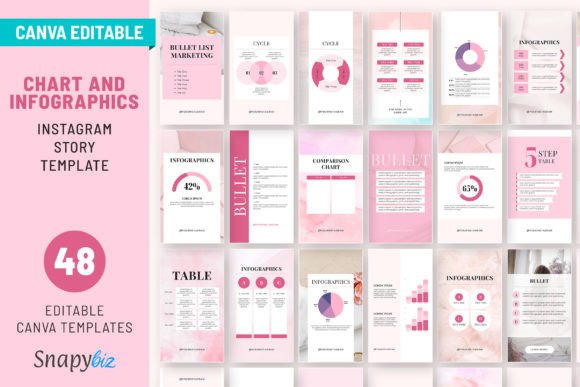
The Ultimate Tool for Instagram Data Storytelling: IG Canva Charts and Infographics Story
In the fast-paced world of social media, particularly on Instagram, presenting data clearly and compellingly is a constant challenge. Business insights, growth metrics, and industry analysis need to stand out amidst a stream of visual content. This is where a specialized tool like the IG Canva Charts and Infographics Story template becomes invaluable. It is an all-in-one solution designed specifically to transform complex data into engaging, shareable Instagram Stories. Understanding its purpose and how to use it effectively can dramatically improve your communication strategy, but a few common missteps can undermine its potential.
What This Template Offers and Why It Matters
The IG Canva Charts and Infographics Story template provides 48 professionally designed, fully editable Instagram Story layouts within Canva. It includes a library of charts, graphs, PowerPoint-style slides, and infographic elements. The core promise is efficiency: creating data presentation visuals in minutes rather than hours. For entrepreneurs, marketers, educators, and freelancers, this tool bridges the gap between having important information and sharing it in a format that your audience will actually stop and absorb. It addresses a fundamental need—making data visually appealing and understandable for a platform that thrives on instant engagement.
A Common Oversight: Treating It Like a Generic Template
One major mistake is approaching this template as a generic design kit. Users often download it and immediately start dropping in data without considering Instagram's unique environment. The platform's Stories are vertical, viewed briefly, and require immediate visual hooks. A common result is cramming too many data points into one Story frame, creating a cluttered, overwhelming visual that viewers skip. This undermines the entire goal of sharing business insights.
A better approach is to storyboard your data. Before editing, sketch out how you'll sequence your 48 templates. Use one Story for a key headline statistic, the next for a supporting graph, and another for a concluding takeaway. This leverages the template's variety to create a narrative, not just a single static poster. For example, instead of one infographic with five different charts, create a five-part Story series where each chart is featured prominently, allowing each point to resonate.
The Misunderstanding of "Editable in Any Version of Canva"
The phrase "easily editable in any version of Canva" is a powerful feature, but it can lead to a misunderstanding about capability. Beginners might assume "any version" includes the free version and expect no limitations, while professionals might overlook specific font or element compatibility. The practical reality is that while the template files will open, accessing the full library of charts and customizing them deeply might require certain Canva assets or Pro features.
To avoid frustration, your first step should be a compatibility check. Open the template in your current Canva account—free or Pro—and test editing a complex chart. Can you change the chart type? Can you adjust the data labels freely? This quick test prevents you from committing to a project only to find a key customization locked. It also ensures you understand the tools at your disposal, making your workflow truly efficient.
Selecting the Wrong Template for Your Audience
The template suite is described as perfect for tech industry graphics and informational posters. A mistake is forcing a "tech" aesthetic onto data meant for a different audience, like hobbyists or consumers. Using stark, geometric charts for a lifestyle brand's customer survey results can feel alienating and cold. The design, while professional, must align with your brand's emotional tone.
Practical advice is to audit the 48 templates for tone first. Sort them into categories: formal, playful, minimalist, detailed. Before choosing a chart style, ask if its visual language matches your Instagram page's existing style. A better approach is to customize the color palette and fonts of the chosen template before inputting your data. This ensures the final graphic feels cohesive with your brand, increasing trust and attention from your followers.
Overlooking the "Powerpoint Slides" Component
Many users focus solely on the infographic and chart elements, overlooking the included professional PowerPoint slides. This is a missed opportunity. These slides are designed for a more formal, detailed data breakdown and can be repurposed beyond Instagram. They are ideal for creating companion content for blog posts, email newsletters, or internal reports.
Think of the template as a multi-purpose data visualization pack. If you're creating an Instagram Story series on annual results, use the infographic templates for Stories and the PowerPoint slides to create a downloadable summary for your website. This extends the value of your purchase and ensures consistency across all your communication channels. It turns a single Instagram tool into a comprehensive asset for data presentation.
The Pitfall of Speed Over Accuracy
The promise of creating visuals "in minutes" can incentivize speed at the expense of accuracy. A rushed user might input incorrect data into a beautifully designed chart, or mislabel an axis. On Instagram, where credibility is paramount, especially for professionals and businesses, a single graphic with erroneous data can damage trust more quickly than a boring graphic.
Always implement a data verification step in your process. Even with the time-saving template, schedule a final review where you double-check every number, label, and percentage against your source data. Consider having a colleague or team member glance at it—what is obvious to you might be unclear to a viewer. This step protects your professional reputation and ensures the template enhances, not harms, your communication.
Final Checks Before You Begin
Before making a decision to use the IG Canva Charts and Infographics Story template for a project, a few constructive checks will set you up for success. First, clarify your project's scope: Do you need 5 Stories or 20? Does the template's 48-count provide enough variety, or too much? Second, confirm your data is ready—clean, finalized, and structured. Trying to design with provisional numbers leads to repeated edits and wasted time. Finally, assess your own design confidence. The template is editable, but basic knowledge of Canva's interface is required. If you're a beginner, pair your template use with a short Canva tutorial on chart editing to unlock its full potential efficiently.
By understanding these common misapplications and adopting a more strategic approach, you transform this template from a simple download into a powerful engine for your Instagram data storytelling. It allows you to share business insights with ease, not just speed, and create eye-catching infographics that are both accurate and engaging. The tools are at your disposal; using them with thoughtful intention is how you truly draw attention and engage your target audience like never before.