Mastering Data Visualization with Line Chart Templates: A Comprehensive Guide
Data visualization is a powerful tool for understanding complex information, and one of the most effective ways to present data over time is through the use of line charts. The Line Chart Template. Color Data Infograp offers a versatile and visually appealing solution for creating these charts, making it an essential asset for professionals, educators, and business owners alike.
Understanding the Basics of Line Charts
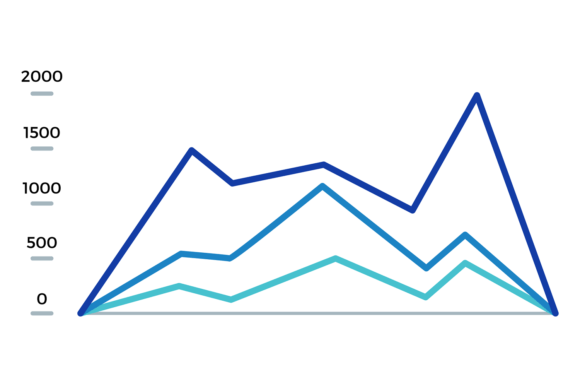
A line chart, or line graph, is a type of chart that displays information as a series of data points connected by straight line segments. This format is particularly useful for showing trends over time, such as stock prices, temperature changes, or population growth. The Line Chart Template. Color Data Infograp provides a structured and colorful way to present this data, enhancing readability and engagement.
Key Components of a Line Chart
- X-axis: Typically represents the time scale, such as days, months, or years.
- Y-axis: Represents the values being measured, such as quantity, amount, or percentage.
- Data Points: Specific measurements at given points in time, plotted on the chart.
- Lines: Connect the data points, illustrating trends and patterns.
Advantages of Using the Line Chart Template. Color Data Infograp
The Line Chart Template. Color Data Infograp offers several advantages that make it a preferred choice for various applications:
- Enhanced Readability: The use of color coding helps differentiate between multiple data sets, making it easier for viewers to understand and interpret the information.
- Professional Appearance: The template's clean and modern design ensures that your charts look professional and polished, suitable for presentations, reports, and publications.
- Versatility: The template can be customized to fit a wide range of data types and presentation styles, from simple single-line charts to more complex multi-line charts.
- Compatibility: Available in multiple formats (EPS, JPG, SVG, transparent PNG), the template can be easily integrated into various software and platforms, including Microsoft Office, Adobe Illustrator, and web-based tools.
Real-World Applications of Line Charts
Line charts are widely used across different fields and industries. Here are some common applications:
Business and Finance
In the business world, line charts are often used to track financial performance, such as sales trends, stock prices, and revenue growth. The Line Chart Template. Color Data Infograp can help business analysts and executives visualize these trends, making it easier to identify patterns and make informed decisions.
Educational Settings
Educators can use line charts to illustrate concepts in subjects like mathematics, science, and economics. For example, a history teacher might use a line chart to show the population growth of a country over the past century, while a science teacher could use it to demonstrate the change in temperature over a period of time.
Healthcare and Research
In healthcare, line charts are used to monitor patient health metrics, such as blood pressure, heart rate, and glucose levels. Researchers also use line charts to track the progress of experiments and clinical trials, providing a clear visual representation of the data.
Creating Effective Line Charts with the Template
To create an effective line chart using the Line Chart Template. Color Data Infograp, follow these steps:
- Collect and Organize Your Data: Gather the data you want to visualize and organize it in a tabular format, with time on the X-axis and the corresponding values on the Y-axis.
- Select the Appropriate Format: Choose the format that best suits your needs (EPS, JPG, SVG, transparent PNG) and open the template in your preferred software.
- Input Your Data: Enter your data into the template, ensuring that each data point is accurately plotted.
- Customize the Chart: Adjust the colors, labels, and other elements to make the chart visually appealing and easy to understand. You can also add titles, legends, and annotations to provide additional context.
- Review and Finalize: Review the chart for accuracy and clarity, and make any necessary adjustments. Once finalized, save the chart and use it in your presentation, report, or publication.
Best Practices for Data Visualization
While the Line Chart Template. Color Data Infograp provides a solid foundation for creating effective line charts, it's important to follow some best practices to ensure your charts are both informative and engaging:
- Keep It Simple: Avoid cluttering the chart with too much information. Focus on the key data points and trends.
- Use Consistent Scales: Ensure that the scales on the X and Y axes are consistent and appropriate for the data being presented.
- Choose Appropriate Colors: Use colors that are easy to distinguish and complement each other. Avoid using too many colors, which can confuse the viewer.
- Add Context: Provide context for the data, such as units of measurement, time periods, and any relevant background information.
- Test for Clarity: Before finalizing the chart, test it with a few users to ensure it is clear and easy to understand.
Conclusion
The Line Chart Template. Color Data Infograp is a valuable tool for anyone looking to create clear, professional, and visually appealing line charts. By following the best practices and leveraging the template's features, you can effectively communicate data-driven insights to a broad audience, whether in a business, educational, or research setting.