The Power of the Imperfect: How Lightbulb Doodle Idea Infographics Reshape Communication
In an age dominated by polished, templated digital assets, a distinct counter-trend is gaining significant traction. Professionals across industries are increasingly turning to a style of visual communication that feels human, approachable, and immediate. At the forefront of this movement is the use of specific illustrative elements, such as the Lightbulb Doodle Idea Infographics Hand. This hand-drawn motif—an illustration of a hand sketching a lightbulb, often surrounded by organic thought clouds or connectors—isn't just a graphic. It has evolved into a powerful symbol representing a shift in how we conceive, share, and sell ideas.
Decoding the Lightbulb Doodle: More Than Just an Illustration
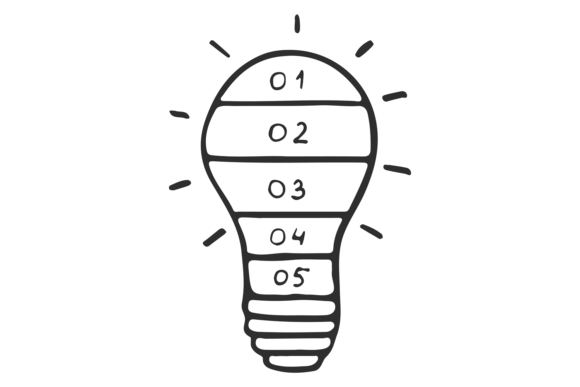
What exactly is the Lightbulb Doodle Idea Infographics Hand? It is a hand-drawn visual element, typically isolated on a clean background, available in versatile formats like EPS, JPG, SVG, and transparent PNG. Its composition is deliberately simple: a human hand, often in the act of drawing or pointing, interacts with a classic lightbulb icon. This lightbulb is not a hyper-realistic 3D render; it's sketched with imperfect lines, suggesting a moment of spontaneous creation. The "infographics" part of its name indicates its primary use: it serves as a key visual anchor within diagrams, process maps, brainstorming frameworks, and presentation slides designed to explain concepts.
The critical distinction lies in its hand-drawn quality. This aesthetic choice breaks from the sterile uniformity of standard icon libraries. It injects personality and a sense of craftsmanship into materials that are often overly corporate. The element communicates that the idea being presented is not a factory-made product but a unique, human-generated insight. This resonates deeply in a market saturated with identical-looking SaaS dashboards and slide decks.
The Broader Trend: The Humanization of Professional Visuals
The rise of elements like the Lightbulb Doodle Idea Infographics Hand fits into a much larger industry and consumer trend: the desire for authenticity and relatability in professional communication. In marketing, we see the success of brands that use casual, "behind-the-scenes" visuals. In technology, UX design increasingly favors interfaces that feel friendly and intuitive rather than purely technical. In corporate training and internal communications, there's a push to make complex information feel less intimidating.
This doodle-style infographic component serves as a bridge. It allows a financial consultant explaining a new investment strategy, a tech entrepreneur pitching an app's core functionality, or a freelance educator mapping out a learning module to present sophisticated content without alienating their audience. The hand-drawn style subconsciously signals, "This was made by a person for you," fostering connection and trust—two commodities increasingly valuable in the digital marketplace.
Why Professionals Are Paying Attention
The attention paid to these assets is not arbitrary. It is a direct response to changing audience needs and preferences. Information overload is a universal challenge. Audiences, whether they are clients, team members, or social media followers, have developed a kind of "visual immunity" to slick, impersonal graphics. They scan past them. A hand-drawn element, like a Lightbulb Doodle, creates a visual pause. It stands out because it looks different. It suggests creativity, brainstorming, and the early, exciting stages of an idea—moments that are inherently engaging.
Furthermore, the workflow expectations of creators themselves have changed. The demand for speed and agility is high, but so is the need for customization. A transparent PNG of a Lightbulb Doodle Idea Infographics Hand can be dropped into a Keynote slide, a Canva design, or a Figma whiteboard in seconds. It provides custom character without requiring hours of illustration work, fitting perfectly into the fast-paced, resource-efficient workflows of modern freelancers, marketers, and startup teams.
Practical Applications: Where the Doodle Lights Up Ideas
Understanding this trend is best reinforced through practical examples. Consider these observable applications:
- Pitch Decks & Investor Materials: An entrepreneur uses the doodle as a central graphic on the slide defining their company's "core insight." The imperfect drawing aligns with the narrative of a raw, brilliant idea that is now being refined.
- Online Course & Workshop Modules: An educator uses it as an icon to denote "key concept" sections within their video course. Its friendly appearance reduces the formal pressure of learning, making complex topics feel more accessible.
- Internal Process Documentation: A team lead embeds the element into a Miro board flowchart to highlight "innovation stages" or "idea validation points." It humanizes what could otherwise be a dry, procedural diagram.
- Content Marketing & Blog Graphics: A digital marketer features the Lightbulb Doodle in an infographic shared on social media about "7 Steps to Generate Blog Topics." It visually brands the entire piece as creative and thought-provoking.
In each case, the asset is not merely decorative. It is semantic. It carries meaning about the nature of the content it accompanies, framing that content as inventive, human-centric, and in a state of development.
Connecting to Larger Developments: The Analog-Digital Blend
The relevance of the Lightbulb Doodle Idea Infographics Hand connects to a profound development in creative and business technology: the seamless blending of analog warmth with digital efficiency. Our tools are digital—design software, collaboration platforms, digital publishing. Yet our most effective communication often borrows from analog psychology: the trust inspired by a handwritten note, the clarity of a whiteboard sketch, the engagement of a rough prototype.
This doodle element is a digital asset that mimics an analog output. It represents the best of both worlds: the scalability, distributability, and editability of a digital file (in SVG, PNG, etc.), combined with the psychological impact of a hand-made sketch. As remote work and digital-first communication become permanent, the need for such bridges between human touch and digital medium will only grow. Assets like this are part of the toolkit that makes digital communication feel less distant and more collaborative.
Changing Needs and the Path Forward
The future of professional communication is not about becoming more polished and generic; it's about becoming more distinctive and connective. The changing needs of audiences revolve around clarity, engagement, and memorability. A list of bullet points is forgettable. A process diagram with standard icons is ignorable. But a visual framework anchored by a relatable, hand-drawn lightbulb and hand tells a story. It says, "Here is where the idea was born," and that narrative sticks.
For creators and businesses, this means a shift in visual strategy. It encourages the curation and use of assets that carry semantic weight and aesthetic personality. The Lightbulb Doodle Idea Infographics Hand is a prime example of such an asset. Its continued popularity is not a passing design fad but a response to a deep, sustained need for human-centric visuals in a digital world. As we move forward, the most effective communicators will be those who master not only the data and the logic of their ideas but also the human art of presenting them.
In essence, this simple doodle embodies a significant insight: in a world of perfect renders, sometimes the imperfect sketch speaks the loudest. It cuts through the noise, signals authenticity, and most importantly, it reminds everyone that behind every complex infographic, business plan, or technological breakthrough, there was once a simple, brilliant idea—and a human hand that drew it.