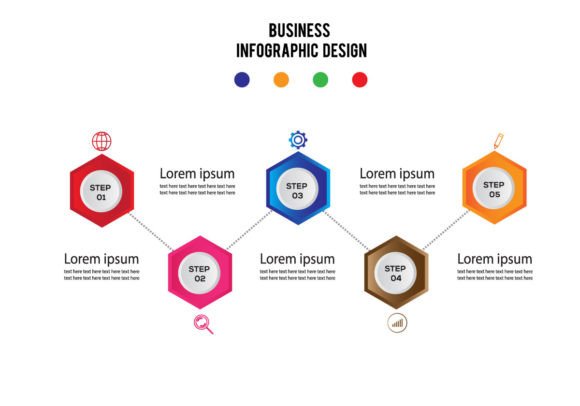
Evaluating the Infographics Elements Template for Design Projects
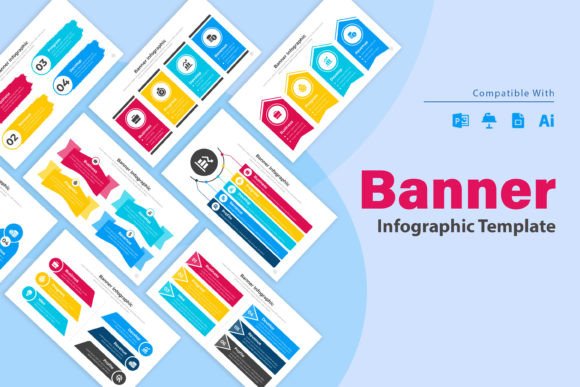
In the domain of graphic design and visual communication, templates serve as foundational tools that can significantly accelerate project timelines. The Infographics Elements Template presents itself as a specific resource aimed at professionals seeking to create structured visual data presentations. This particular template is marketed as part of an evolution series, designed for diagrams and creative banners, and comes in a 300 DPI RGB color mode EPS file format. Understanding its distinct characteristics, how it compares to broader options available, and where it fits best is crucial for anyone considering its adoption.
What Distinguishes This Infographics Template?
The core proposition of the Infographics Elements Template lies in its format and structure. As an editable vector file provided in EPS, and accompanied by a JPG output, it is engineered for manipulation within vector-based software, primarily Adobe Illustrator CC. The promise of “easy to edit” and “well organized layers” speaks directly to a common pain point in design work: dealing with cluttered, unmanageable files that slow down iteration. A vector-based approach means scalability without loss of quality, which is essential for infographics that may be used across different media—from web banners to printed reports.
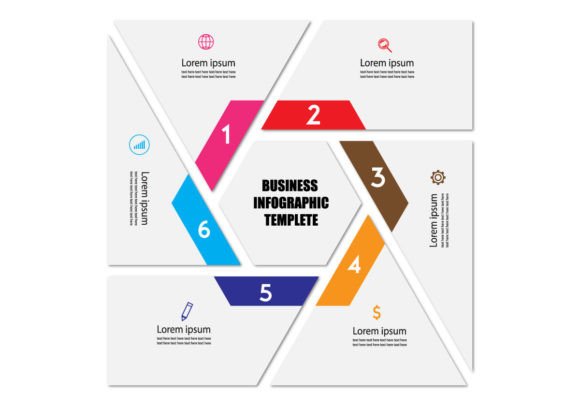
Its specificity as an “elements” template suggests it is not a single, locked infographic layout, but rather a collection of components—icons, connectors, shapes, typographic placeholders—that can be assembled into a custom diagram or banner. This modularity is a key differentiator from more rigid, single-use infographic templates. For a designer tasked with creating a series of related visuals, such as an evolution series showing progression or growth, this toolkit approach can provide consistent visual language across multiple outputs.
Comparing Template Approaches and Formats
When evaluating the Infographics Elements Template, it’s helpful to consider the spectrum of resources available for infographic creation. Designers typically have several paths: building from absolute scratch, using a modular elements kit like this one, or employing a complete, pre-formatted layout template.
Building from Scratch vs. Using a Modular Template
Creating an infographic entirely from scratch offers unlimited creative freedom. Every line, color, and arrangement is a deliberate choice. However, this approach demands considerable time, skill, and resources. For a busy professional or a small business owner without dedicated design staff, this is often impractical. The Infographics Elements Template occupies a middle ground. It provides a curated set of professional-grade vector elements, reducing the time spent on creating basic shapes and icons, while still requiring the designer to arrange and style them into a final composition. This trade-off balances efficiency with creative control.
Complete Layout Templates vs. Element Kits
Many marketplaces offer infographic templates that are essentially finished layouts. You insert your data into predefined sections, change colors, and perhaps adjust some text. These are excellent for rapid, one-off projects where the structure fits the data perfectly. The limitation is rigidity; if your data doesn’t conform to the template’s flow, adaptation can be more difficult than starting anew. The modular nature of an elements template like the Infographics Elements Template offers more flexibility for unconventional data stories or for brands requiring a unique visual identity. It empowers the designer to dictate the narrative flow, not just fill in a preset one.
Key Strengths and Potential Trade-offs
The advertised features of this template highlight several strengths. The “well organized easy to layer” structure is a significant technical benefit. In professional design software, poorly layered files can make simple edits a frustrating chore. A clean, logical layer structure means changing the color of a specific set of icons, or adjusting the stroke width of all connectors, can be done quickly and globally. This organization directly impacts productivity.
The provision of the working file in Adobe Illustrator CC format, along with an EPS, targets a professional user base familiar with this industry-standard tool. For those proficient in Illustrator, this is a seamless fit. However, this represents a trade-off. Designers who primarily use other vector tools, such as Affinity Designer or CorelDRAW, or who rely on more accessible platforms like Canva, may find the file format less compatible. While EPS is a widely supported standard, the “easy to edit” claim is most fully realized within the native Illustrator environment.
The 300 DPI RGB Consideration
The specification of 300 DPI RGB color mode is informative for judging application suitability. 300 DPI is a standard for high-quality print resolution, indicating the vector artwork is suitable for physical materials. RGB color mode, however, is optimized for digital screens. This combination suggests the template is intended for dual-purpose use—both in digital banners (RGB) and in high-resolution printed diagrams (300 DPI). This versatility is a practical advantage for projects with cross-channel requirements. A template specifying only CMYK or only 72 DPI would be more limited in its scope.
Identifying the Best-Fit Situations
The Infographics Elements Template is likely the right choice in specific scenarios. Consider a marketing agency that needs to produce a coherent suite of infographics for a client’s product evolution story. The modular elements allow them to create a consistent diagram style for a launch timeline, a comparative banner for feature highlights, and another visual for user growth statistics, all sharing the same design DNA. The time saved on creating base elements translates to more time for customizing the message for each medium.
Similarly, an in-house business communicator tasked with producing regular reports might find value. Instead of searching for disparate icons each month or struggling with inconsistent styles, they can pull from a trusted, internalized kit to assemble clear charts and diagrams for executive summaries. The template acts as a standardized visual library, improving both speed and brand consistency.
When Another Option Might Be Necessary
This template may not be the optimal solution in all cases. If the project requires an infographic with a highly artistic, illustrated style that goes beyond standard geometric shapes and connectors, a more custom illustration set or a different template category would be needed. The term “elements” often implies a foundational, somewhat abstract kit, not rich pictorial illustrations.
Furthermore, if the primary user lacks experience with Adobe Illustrator, the core benefit of an “editable vector” file is diminished. The learning curve for professional vector software is steep. In such situations, a template platform that operates within a simpler, web-based editor—even if it offers less granular control—might lead to a better outcome and a faster deliverable. The decision hinges on weighing tool proficiency against the desired output quality and customization level.
Practical Comparison: Project Timeline and Skill Level
A realistic example illustrates the decision factor. Imagine a small nonprofit needs a single infographic for an annual fundraising campaign webpage. They have a volunteer with basic design sensibility but no Illustrator skills. For them, a drag-and-drop online infographic builder with pre-built blocks might be completed in two hours with a satisfactory result. Using the Infographics Elements Template would require sourcing Illustrator access, a learning period, and potentially more hours to assemble—a less efficient path for a one-time need.
Conversely, a freelance designer serving multiple tech clients expects recurring infographic work. Investing in a robust, organized elements template like this one becomes part of their asset library. Over several projects, the upfront time to familiarize themselves with the kit pays dividends, as they reuse and recombine elements efficiently, delivering higher-quality work faster for each client. Here, the template aligns perfectly with ongoing professional needs.
Making an Informed Decision
Choosing a design resource like the Infographics Elements Template involves evaluating several personal and project-specific factors. First, assess the primary output medium: is it print, digital, or both? The 300 DPI RGB specification of this template covers both, which is a point in its favor if your work oscillates between channels. Second, honestly gauge your or your team’s proficiency with Adobe Illustrator. The template’s value is unlocked within that ecosystem.
Third, consider the nature of your infographic needs. Are they one-off, or recurring and requiring consistency? A modular elements kit excels at building a repeatable visual system. Fourth, think about the style required. If your brand or project demands a very specific, non-geometric aesthetic, you might need to supplement this template with other illustrative assets. Finally, balance the cost of the template against the time savings it offers. For a professional where time is a billable commodity, even a modest time saving per project can justify the investment.
By examining these aspects—format, tool compatibility, project scope, and stylistic needs—you can determine if the Infographics Elements Template fits your workflow. It stands as a practical tool for certain professional contexts, offering a blend of efficiency and flexibility, while clearly not being a universal solution for every infographic task. Understanding its distinct position in the landscape of design resources allows for a more strategic and effective selection process.